

Blog
The Ultimate Walkie Talkie Guide: Solving Real-World Communication Problems for Beginners, Businesses & Outdoor Teams

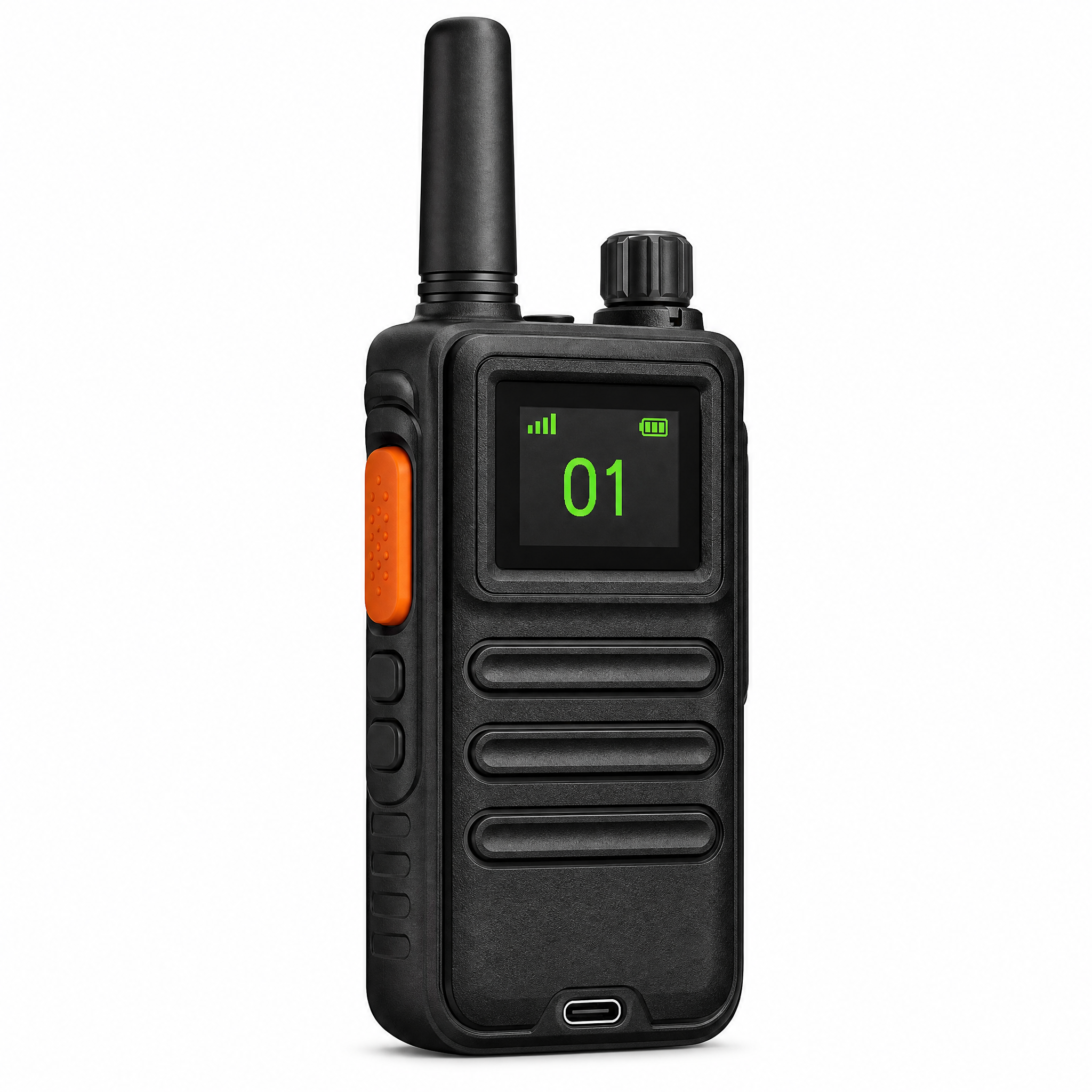
Every week on Reddit, the same questions appear: “What’s the best walkie talkie with long range?” “Do I need a license?” “Why can’t my radios reach more than half a mile?” If you’ve ever been frustrated by spotty communication on the job site, dead zones on a hiking trail, or the confusing maze of radio regulations — this guide is for you.
After analyzing hundreds of real user discussions across Reddit’s r/amateurradio, r/gmrs, r/Baofeng, and r/securityguards, we’ve identified the six most painful problems people face with two-way radios — and the exact solutions that work in 2026.
Pain Point #1: “My Walkie Talkie Range Is Terrible”
This is the #1 complaint on Reddit — and for good reason. A r/securityguards user reported their radios couldn’t reach from the parking lot to the third floor. Another on r/Baofeng couldn’t get signal across a 2-acre property.
Why it happens: Most consumer walkie talkies advertise “35-mile range” but that’s measured mountain-top to mountain-top in perfect conditions. In reality, buildings, trees, hills, and even weather cut that to 0.5-2 miles.
The solution in 2026: PoC (Push-to-Talk over Cellular) LTE radios. Unlike traditional radios that rely on line-of-sight radio waves, PoC radios use 4G/5G cellular networks — giving you nationwide range wherever there’s cell coverage. For large properties, multi-story buildings, or teams spread across cities, this is the game-changer. Our PoC LTE radios deliver crystal-clear audio from New York to California without repeaters or base stations.
Budget fix: If you’re sticking with traditional radios, upgrade to a high-power model (5-10W instead of 0.5-2W) and add a longer aftermarket antenna. Professional DMR and analog radios start with 5W+ output for real-world 3-8 mile range in urban environments.
Pain Point #2: “Do I Need a License?” (The FCC Confusion)
Reddit’s r/gmrs is filled with variations of this question. A new user just got their GMRS license and posted: “Trying to choose a good family radio setup — need advice.” The confusion between FRS (license-free, low power), GMRS (license required, medium power), and ham radio (license+exam, high power) is overwhelming for beginners.
Quick answer for 2026:
| Radio Type | License Needed? | Real Range | Best For |
|---|---|---|---|
| FRS | No | 0.5-1 mile | Kids, camping, casual |
| GMRS | Yes ($35, no test) | 1-5 miles | Family, outdoor, road trips |
| Ham Radio | Yes (exam required) | 5-50+ miles | Hobbyists, emergency comms |
| PoC LTE | No | Nationwide | Business, security, logistics |
| DMR | Yes (business license) | 3-10 miles | Construction, factories, hotels |
Pro tip: PoC LTE radios require zero licensing — just insert a SIM card and start talking. No FCC paperwork, no frequency coordination, no exam. This is why security companies and logistics teams are switching en masse.
Pain Point #3: “Which Radio Is Actually Durable Enough?”
A Reddit user in r/camping posted: “Anyone into camping or outdoor stuff and needs a solid walkie talkie? I’ve tried a few…” The thread reveals the universal frustration: cheap radios die after one rain, one drop, or one dusty day.
What to look for:
- IP Rating: IP67 means dust-tight and submersible in 1 meter of water for 30 minutes. IP54 is splash-resistant. For outdoor work, go IP65+.
- MIL-STD Certification: Military-grade drop and shock resistance. If it can survive a 6-foot drop onto concrete, it’ll survive your job site.
- Battery Life: 1600mAh = 8-12 hours talk time. 3000mAh+ = full shift plus overtime. Nothing worse than a dead radio at 4pm.
Our industrial-grade radios are built to IP67 waterproof standards with MIL-STD drop protection — designed for construction sites, not display cases.
Pain Point #4: “I Bought a Radio, Now I Can’t Figure Out How to Program It”
The r/Baofeng subreddit is legendary for programming horror stories. Users spend hours with CHIRP software, CTCSS codes, and frequency tables — and still can’t get their radios to talk to each other.
The 2026 solution: PoC LTE radios eliminate programming entirely. No frequencies. No CTCSS tones. No channel banks. Turn it on, select a talk group, press PTT. Done. Plus, Android-based models let you install Zello, RealPTT, or your company’s app directly on the radio.
For traditional radios, look for models with keypad programming (enter frequencies directly on the device instead of needing a computer and cable). Our keyboard-programmable radios support manual frequency input.
Pain Point #5: “We’re Growing and Our Old Radios Can’t Scale”
This one comes from business owners. A security company on r/securityguards reported that when they expanded from 5 to 20 guards, their analog radios became a cacophony of cross-talk. Hotels, warehouses, and event venues face the same problem: you can’t just buy more radios — you need infrastructure.
Traditional scaling requires: Repeaters ($500-$2000 each), frequency coordination, FCC licensing, antenna installation — easily $5,000-$10,000 for a medium-sized deployment.
PoC LTE scaling: Buy another radio. That’s it. The cellular network IS your repeater. Add 5, 50, or 500 radios to your fleet instantly. Create unlimited talk groups. Manage everything from a web dashboard. Our OEM/ODM team can even pre-configure your entire fleet before shipping.
Pain Point #6: “The Accessories Are a Nightmare”
A r/HamRadio thread revealed the chaos: “Help! I bought a Baofeng UV-5R and none of my accessories fit.” Antenna connectors, battery pin configurations, programming cables — every brand uses different standards.
How to avoid the accessory trap:
- Stick with one brand ecosystem (Motorola accessories work with Motorola radios, Hytera with Hytera)
- Check connector types before buying (SMA-F vs SMA-M for antennas, 2-pin vs multi-pin for audio)
- Buy from suppliers who guarantee compatibility — our accessories catalog lists exact radio model compatibility for every battery, antenna, charger, and headset
The Bottom Line: What Should You Actually Buy?
After reviewing hundreds of Reddit threads and real user experiences, here’s our recommendation matrix:
| Your Situation | Recommended Solution |
|---|---|
| Casual family use, camping, kids | FRS radios — cheap, no license |
| Outdoor enthusiasts, road trips, family ranch | GMRS radios — $35 license, 5W power, repeater-capable |
| Construction crew, warehouse team | DMR digital radios — clear audio, 5-10W, business licensed |
| Security company, logistics fleet, hotel staff | PoC LTE radios — nationwide range, zero license, unlimited scaling |
| Emergency preparedness, disaster response | Dual-mode: PoC LTE primary + GMRS backup |
Still not sure what you need? Our team has helped 50+ countries equip their teams. Contact us for a free consultation and radio recommendation tailored to your specific use case, environment, and budget.
This article was researched using real user discussions from Reddit communities including r/amateurradio, r/gmrs, r/Baofeng, r/HamRadio, r/securityguards, and r/camping. Problems cited are based on actual user experiences. Solutions reflect current technology available in 2026.


